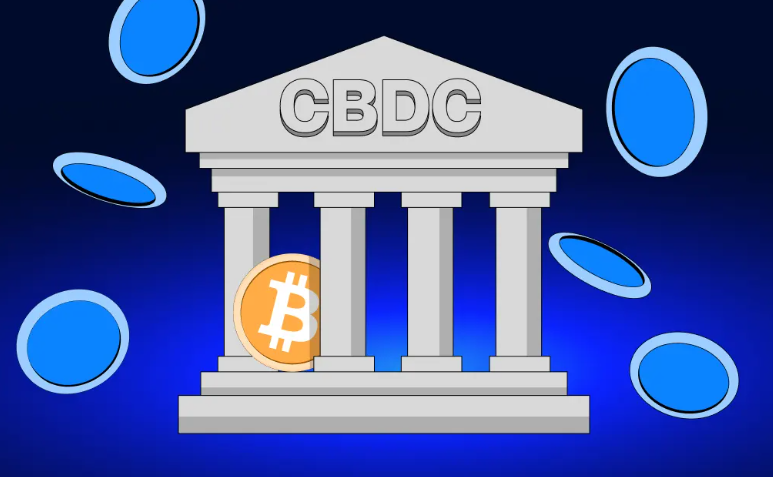
The emergence of Central Bank Digital Currencies (CBDCs) and cryptocurrencies has sparked significant discourse in the financial sector. CBDCs are state-sanctioned and aim to integrate with existing monetary systems, enhancing financial inclusion. Conversely, cryptocurrencies thrive on decentralization and user autonomy, often challenging conventional banking norms. This dichotomy raises critical questions about regulation, user behavior, and the future stability of financial systems. The implications of these developments are profound and warrant closer examination.
Understanding Central Bank Digital Currencies (CBDCs)
As global economies increasingly embrace digital innovation, Central Bank Digital Currencies (CBDCs) have emerged as a pivotal response to the evolving financial landscape.
These state-backed digital currencies aim to enhance financial inclusion by providing accessible banking services to unbanked populations.
See also: courseoriginal
The Nature of Traditional Cryptocurrencies
Central Bank Digital Currencies (CBDCs) represent a state-driven approach to digital finance, in stark contrast to traditional cryptocurrencies, which operate on decentralized networks.
These cryptocurrencies embody the principles of decentralized finance, allowing users to engage in peer-to-peer transactions without intermediaries.
Additionally, they offer transaction anonymity, appealing to those who prioritize privacy and autonomy in their financial interactions, free from centralized control.
Regulatory Frameworks and Governance
While traditional cryptocurrencies thrive in a decentralized environment often resistant to regulatory oversight, the emergence of Central Bank Digital Currencies (CBDCs) has prompted a reevaluation of governance and regulatory frameworks in digital finance.
Regulatory challenges arise as policymakers seek to balance innovation with consumer protection, necessitating robust governance structures that can adapt to the dynamic nature of digital assets while ensuring financial stability and security.
Future Implications for the Financial System
The evolving landscape of digital finance, shaped by the distinct characteristics of CBDCs and cryptocurrencies, presents significant implications for the future of the financial system.
CBDCs may enhance financial inclusion, providing unbanked populations access to digital currencies, while cryptocurrencies challenge traditional monetary policy frameworks.
As these technologies develop, their interplay could redefine economic structures, influencing regulation, consumer behavior, and global financial stability.
Conclusion
In the grand arena of digital finance, CBDCs and cryptocurrencies stand as titanic forces, each vying for supremacy in a rapidly evolving landscape. As CBDCs promise to revolutionize state control over monetary policy, cryptocurrencies champion a radical reimagining of financial autonomy. The collision of these two paradigms heralds an unprecedented era, where regulatory frameworks may either forge a harmonious coexistence or spark a chaotic upheaval, forever altering the very fabric of our economic reality. The stakes have never been higher.